









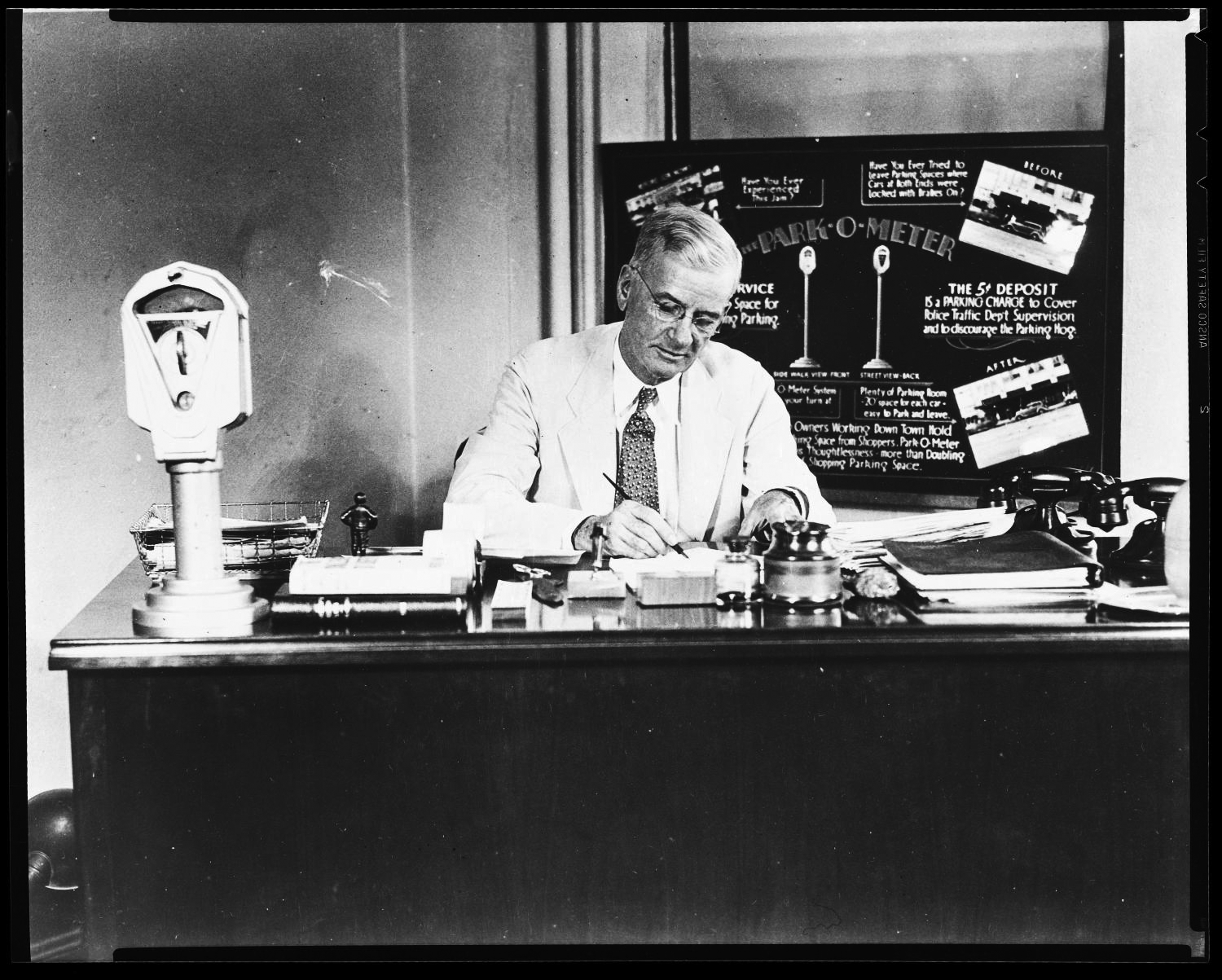
Carl Magee!
Carl Magee lived the kind of life that sounds more like an adventure story than real history. There were gunfights, investigations, angry politicians, and even an invention that changed the world. Carl was a journalist, a lawyer, and the inventor of the world’s first parking meter. If history gave out awards for “Most Likely to Start Trouble and Invent Something Useful,” Carl Magee would have been a top contender.
In the early 1900s, Magee owned newspapers in New Mexico and believed reporters should do more than just write polite stories. He used his newspaper to expose a powerful group of politicians known as the Santa Fe Ring. These men were accused of using threats and violence to control land and politics. People were too afraid to challenge them, but not Magee. He printed story after story about the shady deals, making some very powerful enemies along the way.
He also helped uncover the famous Teapot Dome scandal in the 1920s, where government officials secretly gave oil companies permission to drill on public land. One of the men involved, a government leader named Albert Fall, was furious with Magee. When the two men ran into each other in a hotel lobby, tempers exploded into a fight. Shots were fired during the chaos, and the shocking scene made headlines across the country. Later, Fall would become the first U.S. cabinet member ever sent to prison for corruption.
After all the trouble in New Mexico, Magee moved to Oklahoma, where a different kind of problem was growing. Oil had been discovered, and people were rushing into cities like Oklahoma City hoping to strike it rich. Soon more and more people began buying automobiles. At first there were only a few cars on the streets. Then there were hundreds, then thousands. Finding a place to park cars was nearly impossible. Drivers circled the blocks like hungry buzzards, and arguments over parking spots sometimes turned into shouting matches or even fistfights.
Carl Magee decided there had to be a better way. So he invented a small metal machine that would keep track of how long a car stayed parked. Drivers would drop a nickel into a slot, and the machine would tick away the minutes. He called it the Park-O-Meter. It was the world’s very first parking meter. Not everyone was happy about it. In fact, plenty of people were furious. Imagine being told you had to pay money just to park your car on the street! But the idea worked. Soon cities across the country, and then the world, began installing parking meters. Carl Magee died in 1946, but his invention is still around today. And somewhere, every time a driver groans about getting a parking ticket, the legacy of Carl Magee lives on.