









Thanksgiving!
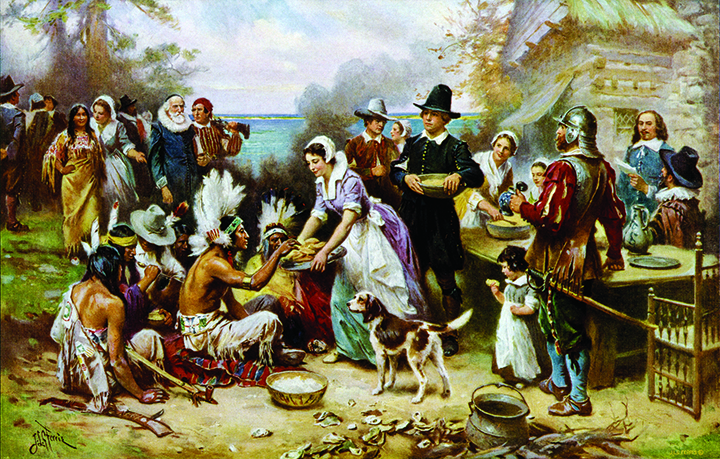
Thanksgiving is an American traditional time to spend with family and friends and give thanks. It has spread and is now celebrated around the world on different dates. Thanksgiving in the United States is traced back to the original English settlers. Those settlers had finished one year in Plymouth and the harvest season had just ended. To celebrate this accomplishment the settlers all came together inviting members of the Wampanoag Indian Tribe. Although the United States claims Thanksgiving as their holiday Canada says they celebrated it 40 years before the U.S. did. Either way it is still an American holiday since both countries are on the North American continent.
In 1863 President Abraham Lincoln declared Thanksgiving a national holiday. We now celebrate it on the fourth Thursday of November every year. Over the years many people have donated food to the President of the United States of America for Thanksgiving. The most common has been live turkeys. The President, Calvin Coolidge, and his family turned that racoon into a pet named Rebecca. When people found out how much the Coolidge family loved animals, people sent animals from all over the world. They were given a bear, lion cubs, a wallaby, birds and more. Mrs. Coolidge always found them a home at a zoo and only turkey was eaten at their Thanksgivings.
Turkeys are wild birds that are native to the Americas. There is evidence that turkeys were caught and domesticated over 1000 years ago by the Maya and Inca people. There were so many wild turkeys in North America that they became one of the most hunted birds by settlers and pioneers.
The world’s most famous parade is held on Thanksgiving day and has been since 1924. Macy’s had opened the world’s largest department store in New York City and they wanted to show it to the world. Although there are floats, bands and horses in the parade now, the balloon characters are the favorites. One of the first balloon characters was Felix the Cat and he still flies today. Other balloons you may see are Spiderman, Snoopy and Spongebob.
Over the years there have been some very strange Thanksgiving activities and traditions. For example Turkey Bowling. This activity was started in the 1980’s when an employee at a grocery store got bored. He set up some 2 liter soda bottles and rolled a frozen turkey toward them. Someone found out and it made the local newspaper. After that it ended up on the national news. A lot of people tried it and still play the game today. Another activity is the Turkey Trot. People dress up as turkeys and run in a 5K race. It is hilarious to see hundreds of human turkeys running down the road.
What do you call a running turkey?
Fast food.