









Polar Bears!
Did you know that Polar Bears are the largest of all the bears in the world? They are so big that they are the size of a small car. They live in the arctic and can swim for miles so they are classified as a marine mammal. Let’s take a look at these amazing animals that live in the arctic areas of the United States, Russia, Canada, Norway and Greenland. There are many different names for the polar bear. Some people call it the sea bear, ice bear or white bear. The Inuit people who are indigenous to the northern polar region call it Nanuk. Nanuk means the strongest of all bears and it deserves respect.
You would never guess that this giant began life weighing 1-2 pounds. That is the size of an adult squirrel! In two to three months the cubs already weigh 25-30 pounds. Most Polar bear moms have two babies at a time. These twins will live with their mom for the next two years learning to hunt and survive in some very harsh conditions. Within five years the cubs have become full grown adults. A male Polar Bear will weigh up to 1,200 pounds and a female will weigh up to 700 pounds. The largest Polar Bear recorded was 2,209 pounds and stood 12 feet tall. In order to help these giants walk on snow and paddle in the water an adult bear's feet get as large as one foot wide.
What exactly does an animal the size of a car eat? They are carnivores. Unlike other bears who eat many different things, polar bears pretty much just eat meat. Their favorite foods are seals, walrus and anything else it can catch. They don’t even mind eating what is left of a whale that has washed on shore. An adult bear needs 12,000 calories a day to survive compared to a human adult that needs 2,000.
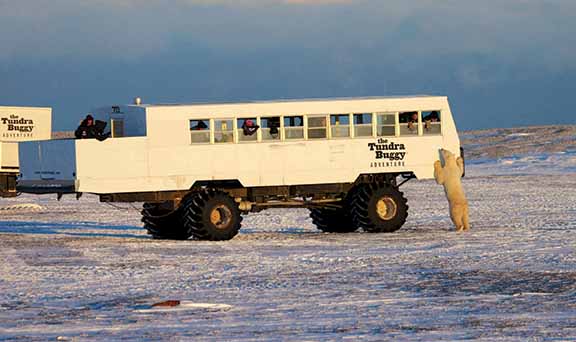
Canada is the home to more than half of the polar bears in the world. Right in the middle of the polar bear range is a town called Churchill. Churchill is called the polar bear capital of the world. Many people actually plan vacations to Churchill so they can see the bears. A ride in a Tundra Buggy could get you face to face with one. Although many bears migrate through Churchill the native population knows how to live with the giant animals. Only two people have died there because of bear attacks since 1968.
Polar bears are the kings of adaptation. Adaptation is the change made over time to help an animal survive. Polar Bears have many features that make it perfect for living in the arctic. We talked about the size of their feet but the pads on the bottoms of the feet are like rubber with little knobs called papillae. These keep the bears from slipping on ice. Another adaptation is their fur, which by the way is not white. They have a double layer of fur that helps keep them warm and dry. The clear hollow hairs help the bears take on the color of their surroundings. That’s why we think they are white. They are surrounded by snow and ice and it helps camouflage the bear. Their skin is another adaptation. It is black and that helps it absorb sunlight and stay warm. Polar bears also have a thick layer of fat called blubber. The blubber keeps them warm in freezing weather and in the cold water.
Polar bears are listed as threatened under the Endangered Species Act. One thing that has caused the decline in population is pollution which reaches the bears through the food chain. From plants to fish, fish to seals, seals to bears. The pollution affects the health of the bears and their ability to survive. Another threat to the bears is global warming and the reduction of polar ice.