









Kids of the American Revolution
The United States of America is celebrating its 250th birthday this year. In school we learn about famous leaders like George Washington, Paul Revere and Thomas Jefferson or brave soldiers fighting on the battlefield during the American Revolution. What we don’t learn is that many children helped America win its independence from Britain.
Although they were too young to vote or serve as regular soldiers, kids found ways to support the Patriot cause. We celebrate the adults who helped, but we also need to celebrate the young heroes who were so important to the victory of the revolution.
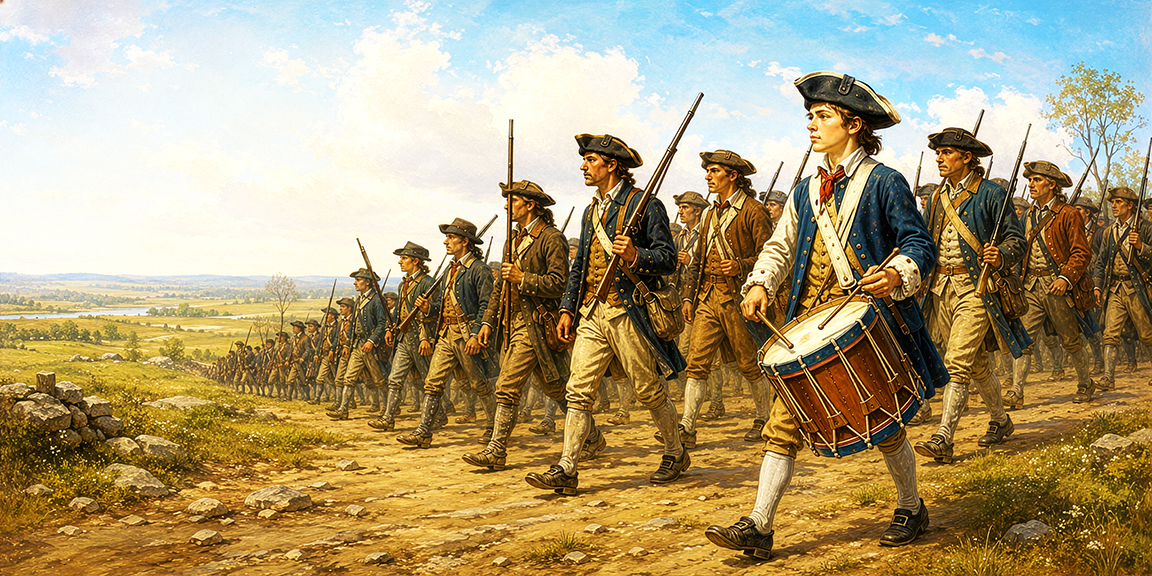
Drummer boys had a very important job and some of them were only 10 years old. They traveled from camp to camp and battle to battle. During the battles the noise was so loud no one could hear the commanders shouting out orders. The drummers would use special drum beats to send messages. They had to memorize different signals and play them correctly. The rebels would have lost many battles without those boys.
A 15-year-old boy named Joseph Plumb Martin joined the army during the American Revolution. He knew that being a soldier would be dangerous, but he volunteered anyway. That decision would take him on an incredible adventure filled with excitement, hardship, and bravery. After the Revolution, Joseph wrote a book about his experiences. His stories tell us what the war was really like for an ordinary teenager.
Legend says that on a rainy night in April 1777, sixteen-year-old Sybil Ludington mounted her horse and rode nearly forty miles through darkness, mud, and rough country roads to warn local militia members that British troops had raided the American supply depot at Danbury, Connecticut. Galloping from farm to farm, she knocked on doors and shouted warnings, urging men to gather under the command of her father, Colonel Henry Ludington. Despite the storm, the late hour, and the dangers of the journey, she pressed on through the night. By morning, hundreds of militia members had assembled and marched toward the fighting that would lead to the Battle of Ridgefield.
We may not have won the war 250 years ago without the children who carried messages, beat drums and did so many other jobs. They were courageous, worked hard, and showed determination. Their stories show that young people can make a real difference. Could you have marched through the rain, snow and battles with soldiers, or ride through the night on a horse to help your country win a war?