






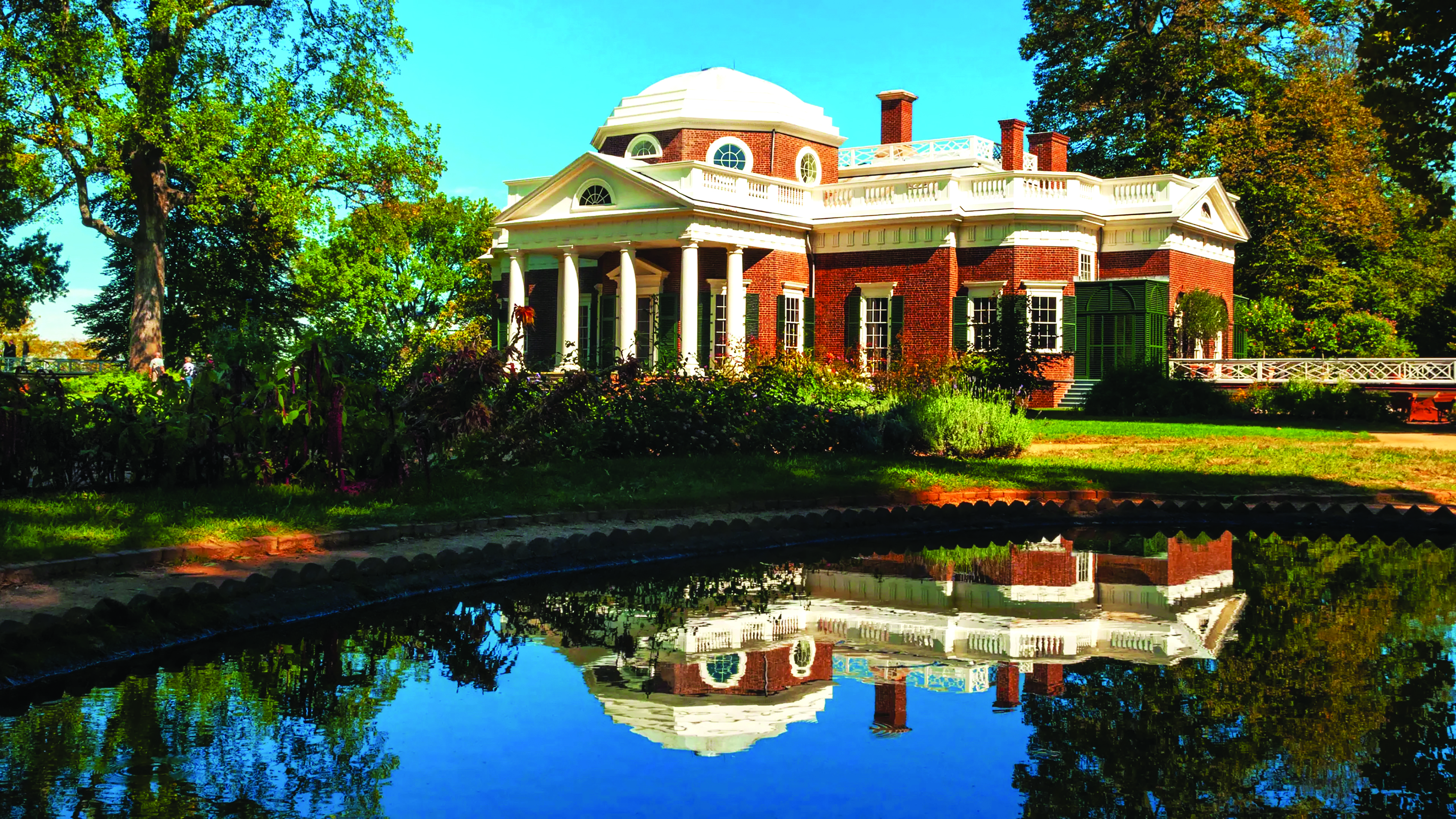
Monticello
As the United States gets ready to celebrate its 250th birthday in 2026, Americans are looking back at the people and places that helped shape the nation. One of the most fascinating places from America’s early days is Monticello, the home of Thomas Jefferson. Jefferson was one of the Founding Fathers of the United States and the main writer of the Declaration of Independence. He also served as the third president of the United States. But Monticello was much more than just a house. It was a place filled with ideas, inventions, books, gardens, and history.
Thomas Jefferson designed the house himself and spent many years changing and improving it. He loved architecture, which is the art of designing buildings. Instead of copying other homes, Jefferson added many large windows and skylights to his design to let as much light in as possible. Monticello reminds us that the nation was built by dreamers, thinkers, workers, and leaders who shaped history in many different ways. Walking through Jefferson’s home is like stepping into a time machine filled with inventions, ideas, and stories from long ago. More than just a house, Monticello stands as a symbol of curiosity, creativity, and the complicated journey of the United States itself.
One of Jefferson’s fantastic inventions is the “Great Clock.” This is no ordinary clock hanging on a wall. Long metal weights slowly drop from the ceiling all the way down toward the floor. But it doesn’t end there — like something out of a mystery movie, the weights pass right through the floor and disappear into the cellar. At the end of each week the clock is wound and the movement starts over.
To guests visiting Monticello in the 1700s, it probably felt like stepping into the home of a genius inventor who was always dreaming up the next amazing gadget. Jefferson loved clever ideas, and the clock was not the only fantastic feature. There are other surprises at Montecello. including doors that opened together with hidden chains, secret passages and staircases and a huge kitchen. Jefferson’s love of learning can be seen everywhere. There are thousands of books on history, science, math, geography, and languages. He believed education was extremely important for the future of the country.
Monticello is now a museum visited by people from all over the world. Walking through Jefferson’s home is like stepping into a time machine filled with inventions, ideas, and stories from long ago. More than just a house, Monticello stands as a symbol of curiosity, creativity, and the complicated journey of the United States itself. If you ever get the chance to visit, you will never forget the main author of the Declaration of Independence and what he meant to the growing, new United States of America.