






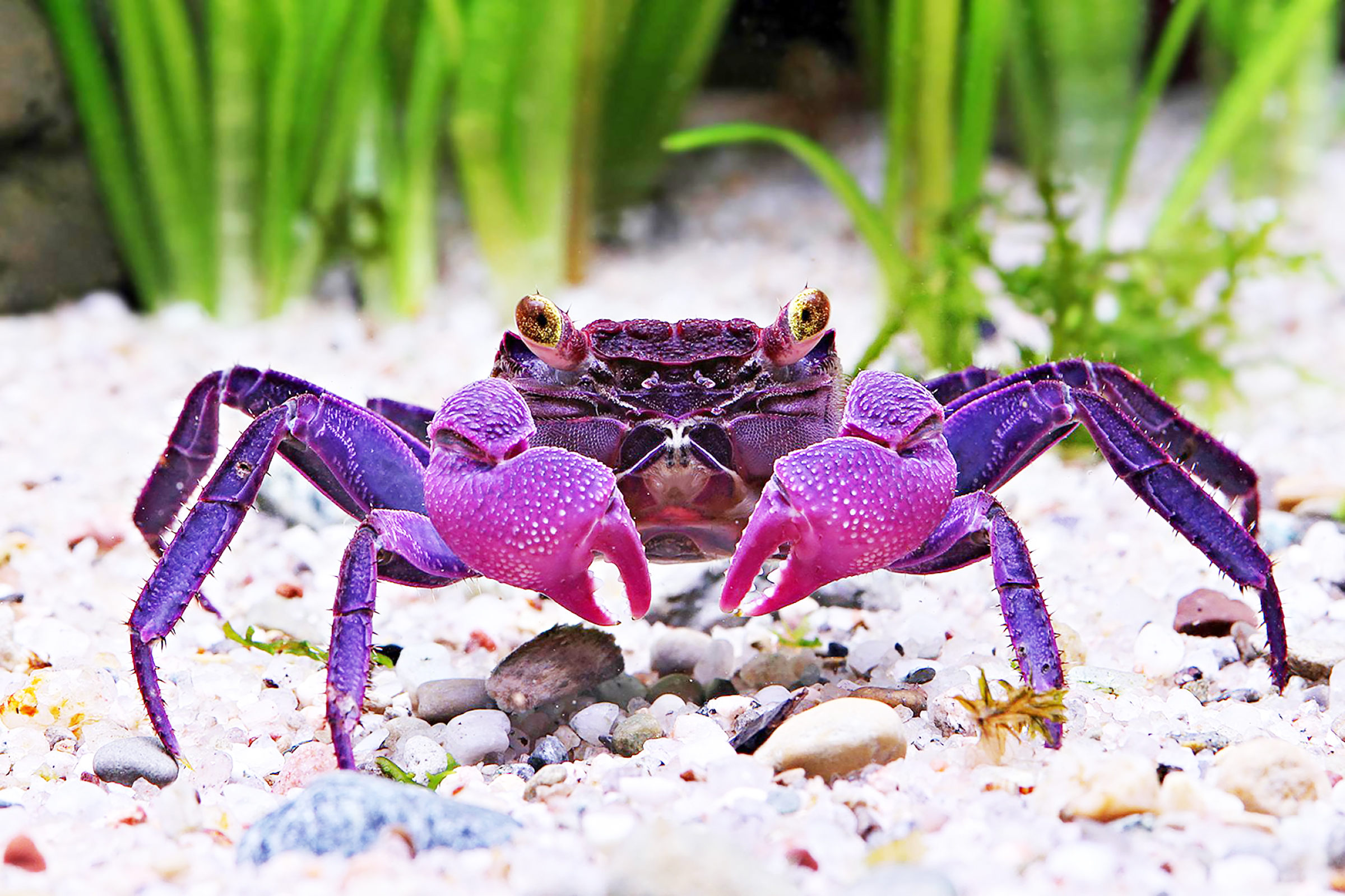
Crabs!
Crabs seem to have big personalities packed inside hard shells. Bold and fearless at times, or shy and quickly scurrying away to hide under rocks at other times. There are more than 7,000 kinds of crabs living around the world, including giant Japanese spider crabs, colorful Sally Lightfoot crabs, tiny pea crabs and bright blue crabs and they can be found along coastlines around the world. With their weird habits, clever survival skills, and busy lives, crabs prove that being different can be a very smart way to live.
Did you know that crabs help keep beaches, coral reefs, and the ocean floor clean by eating dead plants and animals? They also become an important meal for fish, sea turtles, birds, and many other animals. Without crabs, the ocean would be a much less healthy place, making these busy little crustaceans some of nature's hardest workers.
If crabs could compete in the Olympics, they would probably win some gold medals. Crabs zip sideways with amazing speed. They have strong claws that work like built-in tools they use to dig cozy burrows, defend themselves, and even wave at other crabs. Some species, like fiddler crabs, seem to show off by raising one giant claw and waving it around as if they are saying, "Hey, everybody, look at me!" Hermit crabs make everyone laugh because they borrow empty seashells instead of growing their own homes. When they outgrow one shell, they simply move into a bigger one, almost like kids trading in small shoes for larger ones.
The crab family is full of amazing characters. The Japanese spider crab is a giant. Its legs can stretch up to 12 feet across, making it the largest crab in the world. Red crabs on Christmas Island hold parades as they migrate toward the ocean. 50 million crabs moving together at the same time is a real sight to see. The pea crab hides inside oysters, clams, or mussels, where it is a parasite eating the other animals' food. The most colorful species is the Sally Lightfoot crab. It is speedy and climbs rocks and its shell is a rainbow of colors. For some reason, I like the scientific name for the Sally Lightfoot crab, Grapsus Grapsus. It's just fun to say. Grapsus Grapsus!
Even though crabs are tough, they face challenges in the wild. Plastic, trash, and harmful chemicals, warmer ocean temperatures and stronger storms can really affect their habitat. People around the world like to eat crab as a delicacy. At times, crabs are caught faster than they can reproduce, causing populations to get smaller. Laws have been passed to protect these crustaceans, but humans need to step in and help more.