






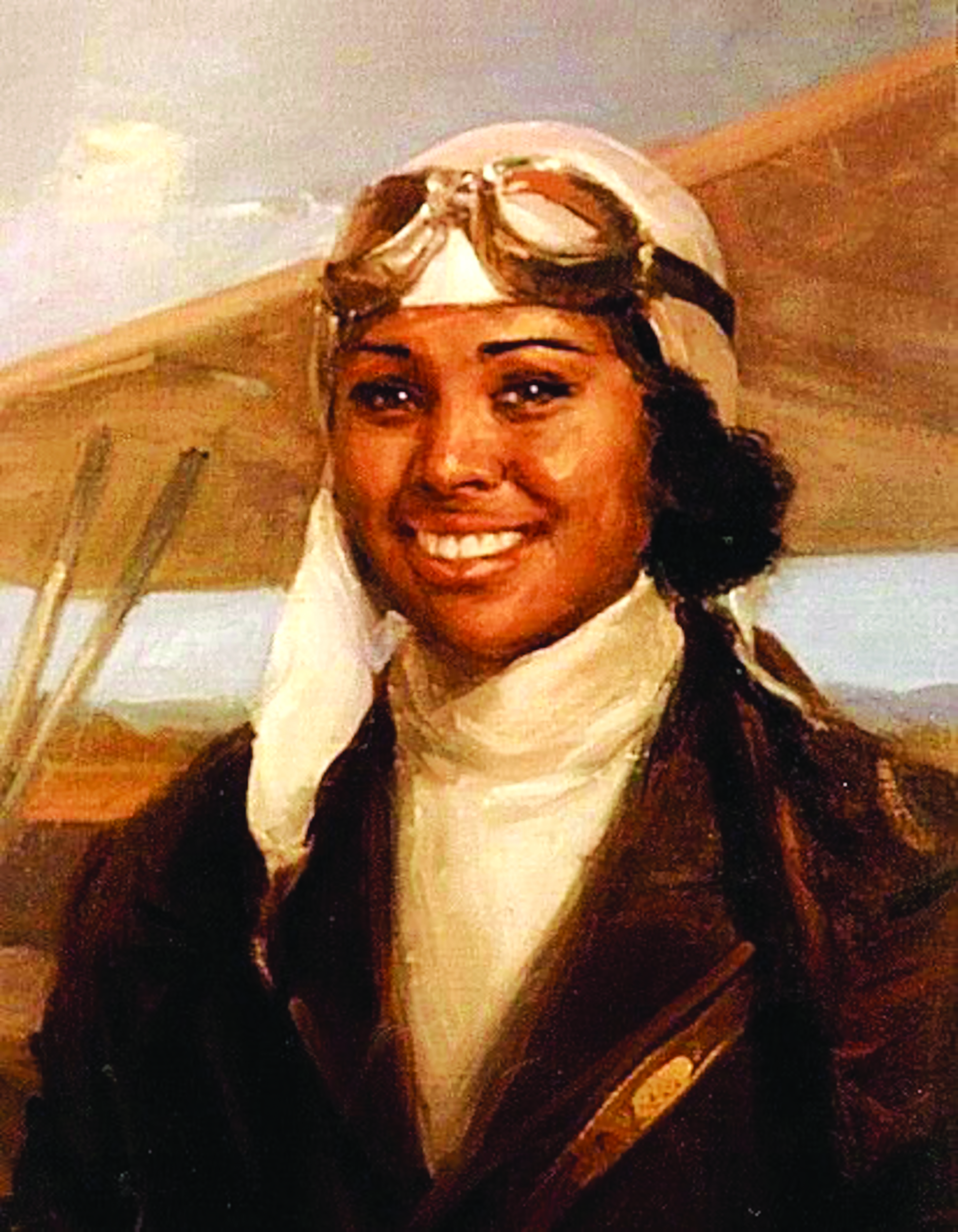
Bessie Coleman
There has to be a first for everything. There is the first time to lose a tooth, the first time to ride a bike and the first day of school. Sometimes the first time something is done impacts the whole world. The first in space, the first to build a gasoline motor and the first civilization to use tools. Bessie Coleman embarked on a life full of firsts. Her accomplishments crossed race barriers, gender barriers and class barriers. She became famous and using her fame, she inspired many people to follow their dreams.
Bessie grew up in Texas in a small town, went to a small school and she lived in a small house. That was about all that was small in Bessie’s house. She had 12 siblings. She was born in 1892, a time where there were no cars, very few people had electricity and flying a plane was still a dream. When Bessie was 11, the Wright brothers took flight in the Wright Flyer at Kitty Hawk, North Carolina. She was fascinated from that day on with everything to do with aviation and she wanted to be a pilot more than anything else in the world.
Bessie faced a lot of hurdles to get from Atlanta, Texas, to flying a plane. You see Bessie was black and native American. Those races in the United States at that time were segregated from other people in the population. Second, Bessie was a woman. Women were not supposed to do certain things. Another hurdle was money. Bessie’s family was very poor. If she wanted to go to pilot school, it would cost a lot of money. The more that people told her she would never be able to be a pilot, the more she wanted to follow her dream. She never gave up. In 1922 she got her pilot’s license.
Bessie Coleman became a barnstormer. Barnstormers were pilots in the 1920s that flew at exhibitions doing stunts, parachuting and walking on the wings of planes. Bessie became a popular performer and flew all over the United States. She flew a Curtiss JN-4D biplane that was a leftover from WWI. These planes were nicknamed “Jenny”. On May 8, 1926 Bessie and another pilot were flying over a field so she could survey it before the show. She was not wearing a safety belt and as she was leaning over the edge of the plane it stalled and flipped upside down. Bessie fell 3,500 feet to the ground dying instantly. Her death did not kill her legacy. She lived on as an inspiration for many young women.