









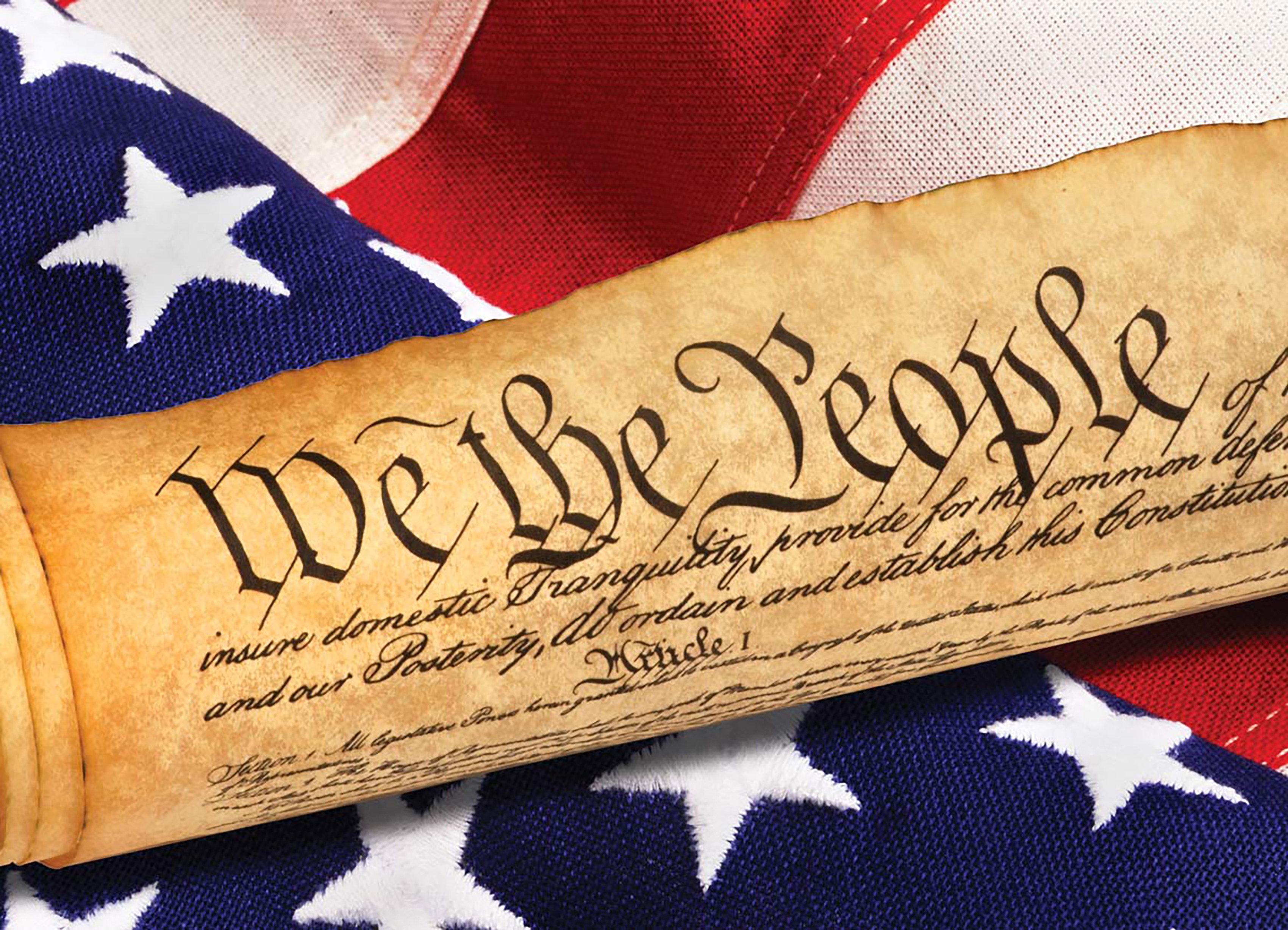
The Constitution
A constitution is the supreme law of the United States. It is a set of rules written down to guide the country and how it is operated. What would life be like without rules? When you play sports there are rules to make the game fair for everyone. When you drive a car there are rules to keep you and everyone around you safe. Before the Revolutionary War, Americans were ruled by the King of England. Colonists thought his rules were unfair and wanted to change them. He did not like that idea at all. After the revolution ended the founding fathers wanted to make rules that were fair to everyone. In 1787 they all got together at the constitutional convention to create a set of rules for running the United States of America.
One of the most important things to the colonists was to make sure power did not go to just one person like a king. To do this they created three branches of government. The executive branch is the president and his advisors. The legislative branch that makes the laws. The third is the judicial branch which decides if laws are fair and legal. It is the job of each branch to make sure that no one is trying to take too much power.
The constitution also gives citizens rights that cannot be taken away but do we know why? Again, it had to do with the king. He controlled religion and told people what church to go to. He quartered soldiers by moving them into the colonists' homes, and the people couldn’t say no. He ordered that newspapers be burned down and he issued orders for people to be put in jail if they said anything bad about him. When the colonists started talking about revolution the king tried to take everyone’s guns away. At times soldiers would enter people's houses and take their food, or search for stuff they shouldn’t have. The list of rules that the king had made was very long and caused a lot of suffering. This is why the founding fathers wrote The Bill of Rights.
The United States of America has a constitution to celebrate. It is the oldest and most successful constitution in the world. It is also one of the shortest. This year, and every year, on Constitution Day we need to remember that we have a lot to celebrate and be thankful for.