









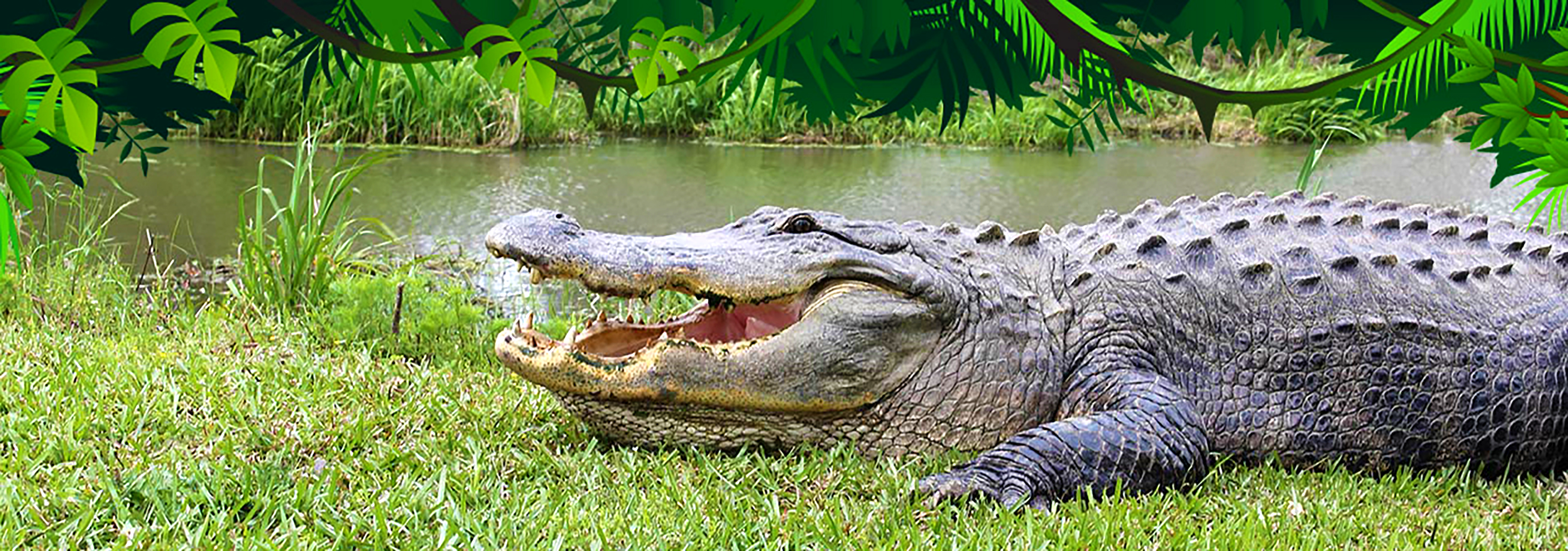
Alligators and Crocodiles
Within the continental United States there are a number of apex predators. There are bears, wolves, cougars, and bald eagles to name a few. Deep in the southern United States, two prehistoric reptiles are also on the list of animals at the top of the food chain Meet the American alligator and crocodile. To most people, crocodiles and alligators look almost the same but they really really aren’t. Just look closer, and you’ll see they’re more like cousins than twins. Both are powerful swimmers, covered in tough, scaly armor. The places they live, how they act, and even the shapes of their snouts tell very different stories.
Most of the alligator population in the United States is located in southern states like Florida and Louisiana. Alligators love freshwater habitats like swamps, rivers, and lakes and both of those states have lots of habitat that makes them the perfect place to live. Louisiana is an alligator paradise, with huge marshes and bayous that make perfect homes and a much smaller human population base. With more people in Florida, humans come into contact with the alligators because they often wander into backyards, golf courses, and even swimming pools. Alligators don’t really care about no trespassing signs or fences and they have even been found at Disney World and Universal Orlando.
Crocodiles, on the other hand, prefer salty or brackish water and are much rarer in the U.S. They live mostly in the very southern tip of Florida, near the Everglades and the Florida Keys. It’s one of the only places in the entire world where both crocodiles and alligators can live side by side. Crocodiles are shy but much more aggressive than alligators. Crocodiles are naturally more territorial and defensive. They’re known to attack anything that comes too close, even boats or other large animals. Both crocodiles and alligators can hold their breath for up to an hour, and scientists have found that crocodiles swallow rocks to help them dive deeper.
Their differences are easy to spot if you know what to look for. Alligators have wider, snouts and dark skin. Crocodiles have pointier snouts and are usually a lighter color. Both of these animals build nests to lay their eggs in. Both of them guard the nest and when the babies come out of the eggs the mothers will very carefully scoop up the hatchlings and carry them to the water. Both care for their young after hatching to increase their chance for survival.
These two species of reptiles play an important role in their environments. Whether sunning on a riverbank or sliding silently through the swamp, crocodiles and alligators continue to rule their watery kingdoms, each in their own unique way. And remember, humans are not always at the top of the food chain.