









Jackie Robinson
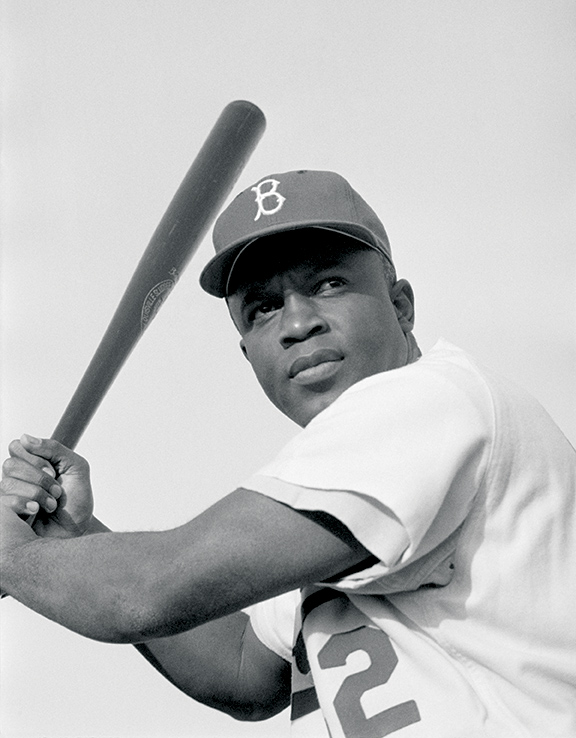
Superstars don’t always come from big cities. As a matter of fact many of them come from small towns. Towns that would never be known to anyone but those that live there. These super athletes, musicians and actors come from all over the globe to gain fans and fame. Sometimes their fame is like a shooting star. It's there and gone in what seems like a heartbeat. At other times the star rises and never sets. The impression made is so impactful that it changes the world. Jack Roosevelt Robinson, “Jackie”, is one of those stars that will shine forever.
Jackie did not begin life as a superstar. His grandparents had been slaves and his parents were sharecroppers. Jackie’s dad left the family before Jackie’s first birthday. His mom decided to move the family to Pasadena, California where her brother lived. She thought life as a single mom would be easier there than in Georgia. But racism was the same no matter where the family lived and Jack would face racism his whole life. As a kid he played sports in school and then went on to college where he set records in more than one sport. In 1942 he was drafted into the army where once again he faced racism. He was placed in a segregated unit. This meant that the black soldiers were separated from the white soldiers. While in the army Jackie was riding an army bus. The bus driver told him to move to the back of the bus. He refused and was arrested. There was a letter written by Jackie Robinson to a lawyer that mentioned “Fair Play”. This was a phrase that would come up for the rest of his life. Jackie just wanted to be given a fair chance in life no matter what color he was.
Jackie left the army in 1944. At that time there were two baseball leagues. One for white players and one for black players. Jackie signed on to play for the Kansas City Monarchs, a team in the Negro Baseball league, in 1945. He was only in Kansas City for five months but he made a huge impression during that time. It wasn’t very long after he joined the Monarchs that he met a man named Branch Rickey. Branch wanted Jackie to join the MLB and play for the Brooklyn Dodgers. He said he was looking for someone who wasn’t just a good player but a good person. He told Jackie that the first black player in the MLB would have to have confidence and good character. Jackie agreed that he could be that person.
On April 15, 1947 Jack Roosevelt Robinson walked out in front of more than 20,000 baseball fans. People booed, threw things at him and threatened his life. Players on his team and others tried to make him quit. They did not want to play with a “Negro”. From town to town and field to field Jackie faced these racist behaviors quietly and with dignity. He made friends and fans began to love him. Jackie Robinson ended his first year of Major League Baseball as the MLB Rookie of the Year. His explosion into professional baseball made it possible for other black players to follow in his steps, but they had some pretty big shoes to fill. In the next 10 years he would be on six all-star teams, was voted MVP in 1949 and helped the Dodgers win the World Series in 1955. In 1956 number 42, Jackie Robinson would retire.
After Jackie retired he continued to work for the equal rights of African Americans right up until the day of his death. At the age of 53 Jackie Robinson died of a heart attack. Every year on April 15th every player in the MLB puts on the number 42 to celebrate Jackie Robinson day. His bravery, athleticism, belief in himself and his actions will keep him living in the hearts of people for centuries to come.