






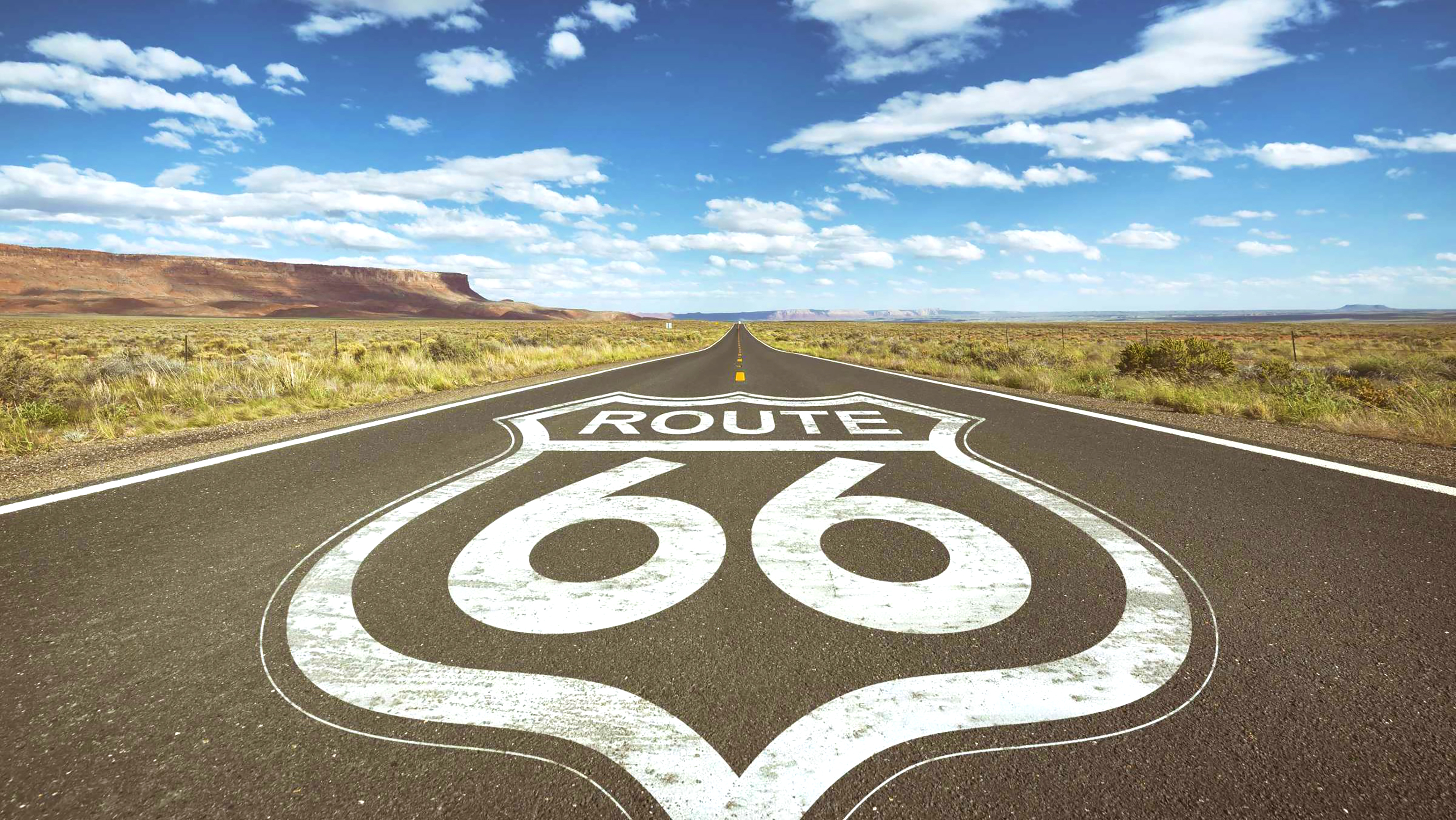
Route 66
Long before interstate highways, the United States of America was connected by railroads. If you wanted to travel long distances, but did not own a horse and wagon, the trains offered a more comfortable and faster way to get from one place to another. As automobiles became more popular in the early 1900s, Americans wanted roads built to explore places they would never see otherwise. A man named Cyrus Avery from Tulsa, Oklahoma, had a vision for a highway that would connect Chicago, Illinois, all the way to Santa Monica, California. He worked hard to make sure the road passed through Tulsa, which gave Oklahoma a central role in America’s new highway system. In 1926, Route 66 officially opened, stretching 2,448 miles and crossing eight states.
Building Route 66 was not easy. In the 1920s and 1930s orange cones and huge machines were not a thing in most places. Road crews used picks, shovels, and even mules to carve the road. During the Great Depression and the Dust Bowl many people lost their jobs, their homes, their farms and they even lost hope. The US Government put a lot of men to work through the New Deal programs such as the Works Progress Administration (WPA) and the Civilian Conservation Corps (CCC). These programs helped struggling Americans find work, and left behind lasting landmarks like bridges, parks, and roads such as Route 66. Route 66 led a lot of people to California. California became a symbol of hope. Posters and word-of-mouth stories made it sound like there were endless jobs picking fruit, harvesting vegetables, and working in the fertile fields of the Central Valley. Families piled everything they owned into old cars or trucks and traveled west on the new highway.
After World War II, the highway entered what is called its golden age. More people owned cars, and Route 66 became the road of family vacations and adventure. Neon signs lit up the nights along the roadside, advertising motels, diners, and gas stations. Travelers could see quirky attractions like the Wigwam Motel in Arizona, where guests slept in giant teepees, or the Blue Whale of Catoosa, Oklahoma. In Texas, the Cadillac Ranch became a famous stop with colorful cars half-buried in the ground. Places like Tucumcari, New Mexico thrived and became a popular place to stop with over 30 motels and dozens of restaurants and gas stations. At the end of the road, families could walk the Santa Monica Pier and look out at the Pacific Ocean.
Over time, the Interstate Highway System pushed Route 66 into a memory kept alive by word of mouth and museums along the way. Disney was able to show what happened to the towns in the movie Cars. Route 66 has never been forgotten. Today, travelers from around the world come to the United States just to drive along what is left of this historic road. They want to experience the history, neon signs, and historic roadside attractions like The Big Texan, Cadillac Ranch, The Blue Swallow Motel and the Blue Whale. Route 66 represents freedom, migration, and adventure. It tells the story of America’s struggles during the Great Depression, its dreams during the Dust Bowl, and its joy in the open road after the war. Someday maybe you can travel what is called "The Mother Road.” To drive the road in any car is fantastic, but the wind in your hair and the fresh air of a convertible adds to the adventure. For more about the road please scan the QR code to watch some videos about the road, then and now.