






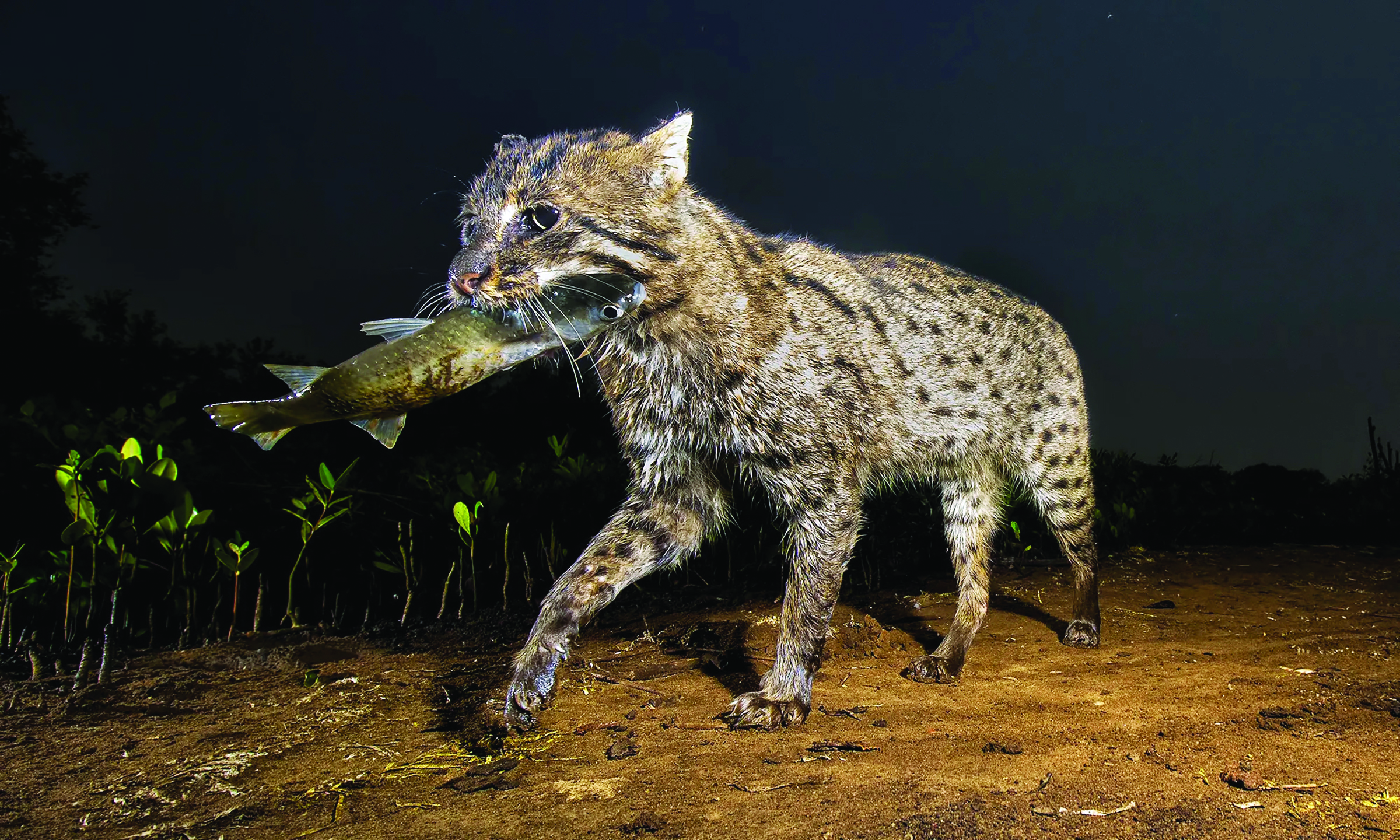
Fishing Cats!
If you are walking through South or Southeast Asia, in the jungles, wetlands or anywhere where the air is warm and the ground is squishy, you may be lucky enough to see one of the strangest cats on Earth. Keep your eyes open for a cat that breaks all the cat rules. You may be fighting off swarms of mosquitos when you see a camouflaged shadow slinking around. That shadow may just be a fishing cat — a cat that will change your mind about cats being just pets. One of the most amazing characteristics of this cat is its love for water. Yes, you heard that right, this cat doesn’t hate water. It is even built to live in areas that have wetlands. This cat would make most domestic cats faint and spotting this wild cat would be one of the luckiest moments of your life.
The soggy feline is shy and mostly nocturnal. The fishing cat lives in India, Sri Lanka, Bangladesh, and Thailand. Places with muddy, humid, areas that smell a little like fish and a little like rotting vegetation. Fishing cats are excellent swimmers, and they aren’t afraid to dunk their whole face underwater and dive deep to catch food — no fishing pole required. Sometimes the sneaky feline will tap the water with its paw to trick fish into coming closer. While the fish thinks dinner is waiting, the fishing cat is ready to snap it up. Their favorite food is fish, but they also eat frogs, small animals, birds and crabs.
These water-loving cats are stocky and strong, making them look like an athlete that has been hitting the gym. They have adapted over time. Their toes are partially webbed and they have sharp claws that act like fish hooks. Their fur is grayish with dark spots and stripes, and they blend perfectly with the shadows and reeds making them hard to see. Their fur coat has two layers that helps them stay dry. When a fishing cat swims or dives, it pulls its small, rounded ears tight against its head to help close off the ear opening so less water can get inside. Keeping water out of their ears helps protect their hearing and prevents infections. This adaptation is super important because they rely on sound to hunt, especially since they are nocturnal and seeing prey that lives underwater is not easy.
The fishing cat proves that not all cats are the same. Some chase laser dots and sleep on cat trees, while others chase fish in a swamp. With its swimming skills, clever tricks, and “I love water” attitude, the fishing cat is like the action hero of the cat world. So next time someone says, “Cats hate water,” you can smile knowingly and say, “Well, not all of them.”