






Asteroids
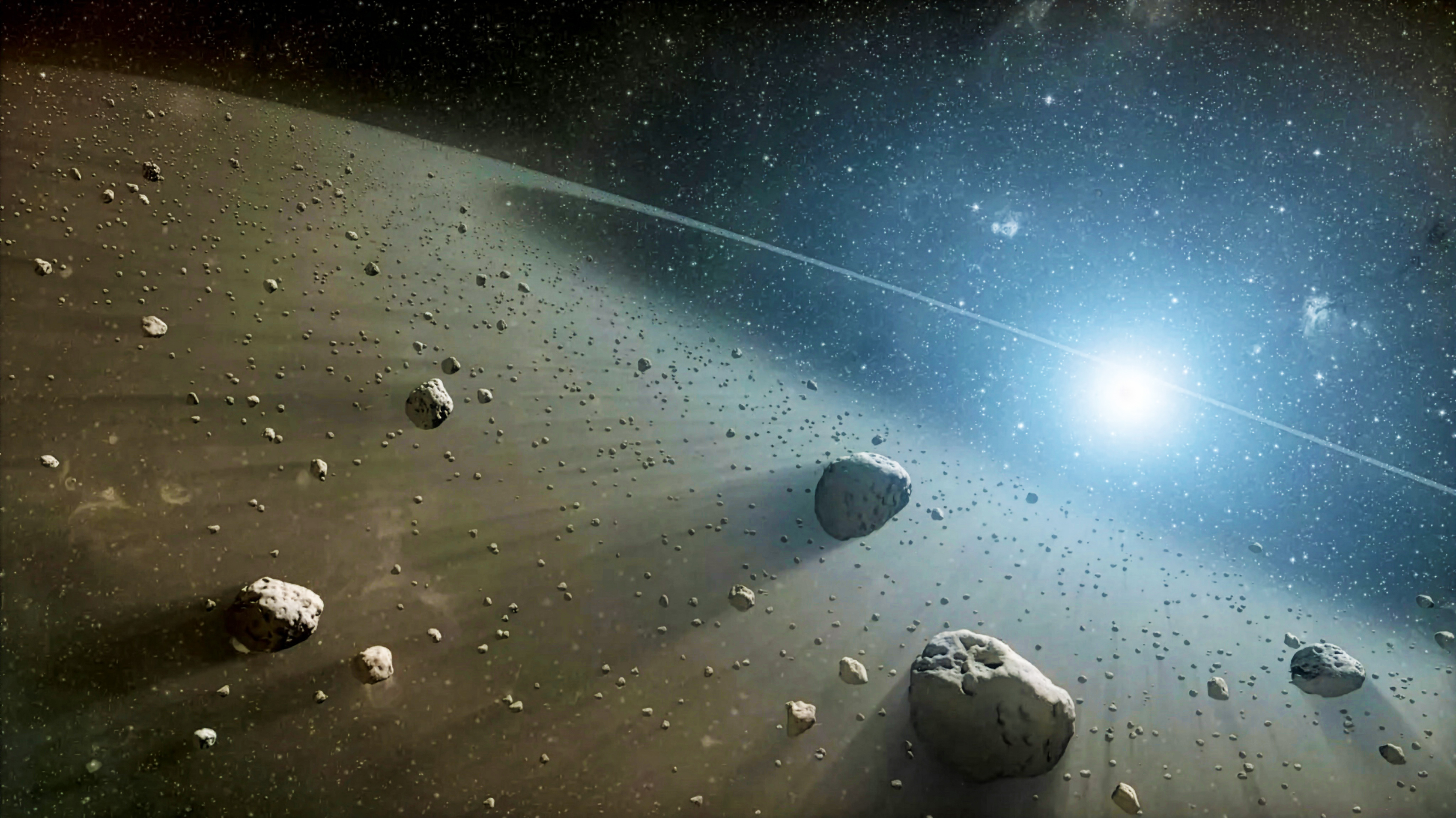
Look up at the night sky and you may realize space isn’t as calm as it seems. It’s actually a giant cosmic shooting gallery filled with speeding rocks called asteroids. These space rocks zoom through the solar system at tens of thousands of miles per hour. Some are as small as pebbles, while others are hundreds of miles wide. Some of those large asteroids are big enough to change the fate of entire planets. The largest known asteroid has been named Ceres and it is as big as Texas.
Most asteroids live in a region of the solar system called the asteroid belt. The main belt is a huge ring of rocky leftovers between Mars and Jupiter. Scientists think these rocks are pieces that never formed into a planet. But not all asteroids stay there. Sometimes, gravity from giant planets like Jupiter can knock them out of place, sending them drifting, or even racing, through space. When smaller bits of rock break off and enter Earth’s atmosphere, they burn up and create bright streaks of light called meteor showers. Those “shooting stars” you see aren’t stars at all, but tiny pieces of asteroids lighting up the sky!
Scientists have found huge craters on planets and moons that prove massive asteroids slammed into them long ago. Large meteors leave behind a crater, or bowl shaped depression where they hit. One famous example is the Chicxulub Crater, created by an asteroid impact. Scientists believe that this meteor wiped out 75 percent of life on Earth, including the dinosaurs. Some scientists even have theories that giant impacts may have slightly changed the tilt of planets or moons by hitting them with incredible force. Imagine something so powerful it could push a whole world off balance. Earth’s own moon is covered in craters.
Should we be worried about asteroids hitting Earth today? It might sound scary, but scientists carefully track thousands of asteroids using telescopes and space technology. Right now, the chance of a large, dangerous asteroid hitting Earth anytime soon is extremely low. Most space rocks either miss us completely or burn up harmlessly in the atmosphere. Space agencies like NASA are always watching the skies. They are even testing ways to push asteroids off course if one has a course that’s on a direct path to hit the Earth. NASA’s NEO surveyor is supposed to launch next year. The NEO is a telescope built just to track asteroids that might hit the earth.
Even though the danger is low, the idea of asteroids colliding with our planet keeps scientists on their toes. Every meteor shower, every crater, and every newly discovered asteroid tells a story about the wild history of our solar system. The Milky Way is an immense place full of surprises and scientists are still learning something new every single day.