






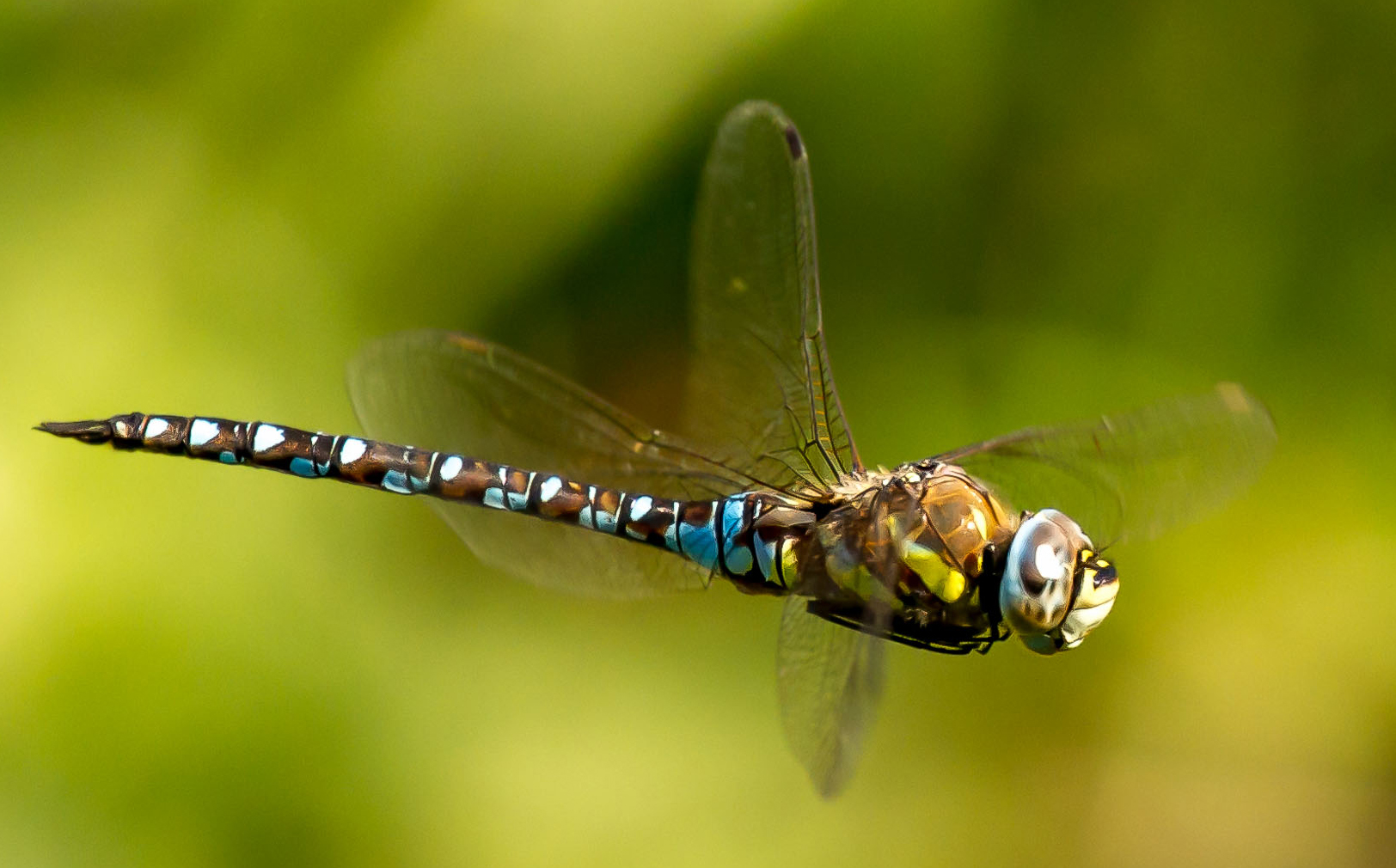
Dragonflies!
We have all seen them zooming past our heads on hot summer days, looking like tiny helicopters with their long, shiny wings. Anisoptera, or dragonflies, have been around for 300 million years — that’s longer than the dinosaurs! They were giants back then, with wing spans as wide two-and-a-half feet and a body as big as your arm. Today’s dragonflies aren’t nearly that big, but they are amazing little fliers and very effective hunters.
One of the coolest things about dragonflies is the way they fly. They swoop, dive, hover, and even fly backward! They have four wings that they can control individually from each other. Simple flicks of those aerodynamic wings give them incredible agility in the air. That’s why dragonflies can catch their food in mid flight. What’s on the menu? Mosquitoes, gnats, and other tiny bugs. In fact, they are considered to be the most efficient predators on the planet — bar none.
Even though they are destined to become the skilled and colorful flyers we see every summer, dragonflies spend most of their lives underwater as nymphs. A dragonfly nymph looks like a little alien fish with six legs, big eyes and a sneaky jaw that shoots out to grab food. Some stay in the water for months and other types stay as long as five years, munching on aquatic bugs, tadpoles and small fish, until the day they crawl out and transform into dragonflies.
Dragonflies come in all shades — shiny green, red, electric blue, even gold. In the sunlight, their wings sparkle like stained glass. If you see one perched on a reed or rock, take a close look and you’ll notice their two large, very complex, compound eyes, each with thousands of tiny lenses called ommatidia. These spot movement from nearly every direction and gives them a 360-degree field of vision to help them catch other flying insets. They also have three smaller, simple eyes. In fact, more than 80 percent of their brain power is dedicated to vision.
Dragonflies aren’t just fun to watch; they’re helpful friends. By eating mosquitoes and other pests, they make summer evenings more pleasant. Dragonflies also have smaller cousins called damselflies. How do you tell them apart? The easiest way to see the difference is dragonflies hold their wings out when they are perched, while damselflies fold their wings against their bodies.