






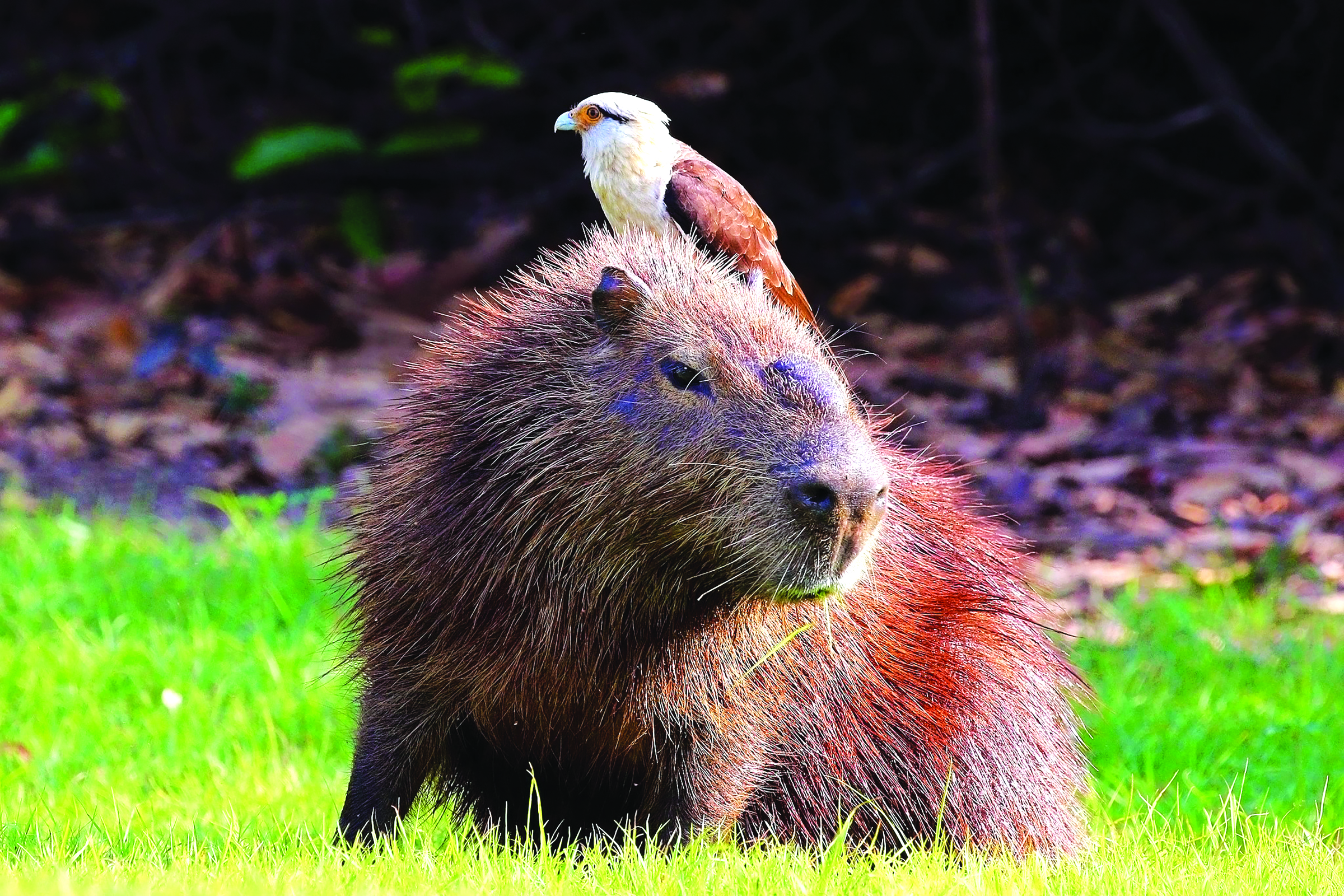
Capybaras!
Cute, social, curious, affectionate, bizarre and impressive are all words that have been used to describe the world's largest rodent. They are twice the size of a beaver and their chubby body has gotten them the name of water pig. This is a rodent that will win your heart over very quickly, but capybaras are wild, not domesticated animals and do not make good pets. They should be left in their natural habitat.
Capybaras are native to Central and South America. They live along the edges of ponds, streams, rivers and lakes where there is plenty to eat. Like beavers, these rodents have webbed feet and like to swim. Capybaras can hold their breath and stay submerged for five minutes. This helps them hide from danger. When they are not in the water, they hide in the tall grasses and reeds along the water’s edge. They do not really dig burrows like other small mammals. Since they live part of their life on land and the other part in the water, this rodent is called semi-aquatic. Although they are native to the southern and central Americas, Capybaras have been discovered in Florida and are considered an invasive species.
This is an animal that likes to live in large groups called herds. They are social and get along well with other animals. You will often see them with other animals like monkeys, birds and turtles. A capybara will even adopt baby animals that have lost their mothers. Scientists believe that other animals love this rodent because they are friendly and they are herbivores. Since they only eat plants, they are not threats to other animals. Living in large groups is one way capybaras protect themselves. They communicate by making different noises but a bark is the warning sound for danger. Capybara females usually have one litter of babies a year. The babies are called pups. A litter can have one to seven babies. Like other animals, capybara pups feed off of milk from their mothers. This only lasts for a week or two and then they are off on their own to live as part of the larger group.
As a close relative to the guinea pig, and being a rodent like a mouse or hamster, it is hard to imagine the size of one of these animals unless you have seen one. A capybara can get up to four feet long and two feet tall. It can also weigh as much as an adult human, getting as heavy as 150 pounds. They have short stubby legs and their hair is wiry like a pig. This is one of the few rodents that has a very short tail. Just like a beaver, the capybara have front teeth that never stop growing. To keep their teeth from getting too long they grind them together as they eat plants and tree bark.
Fun fact: Capybaras eat their own poop. The poop has bacteria in it that helps them break down the hard to digest grasses they eat. When an animal eats its own feces it is called coprophagy.