






Shipwrecks
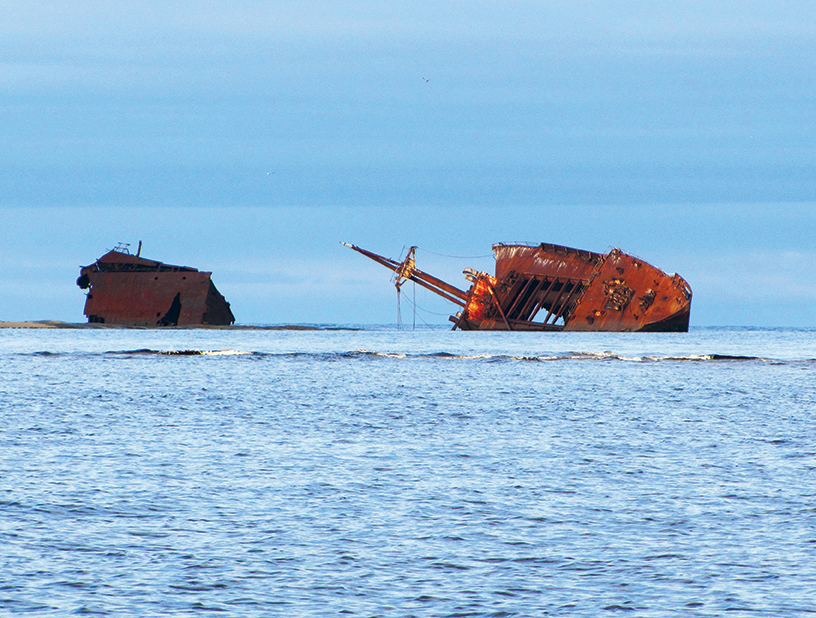
Beached on land or laying on the bottom of the world’s oceans are the remains of many ships. Some have been scuttled or intentionally sunk. Other ships are still sailing the oceans of the world with no crew on board to man them. There are people around the world who have made it their life's mission to discover and explore shipwrecks. Some people are looking for treasure, some are studying history and others look for scientific answers. Whatever the reason for looking for these lost ships there are thousands of them worldwide with more than 20,000 in the waters that are around North American alone.
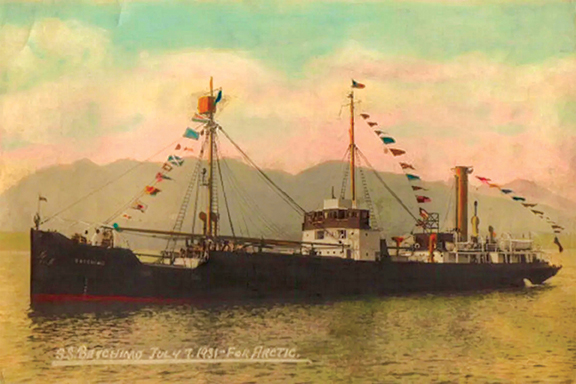
The most feared of all the shipwrecks are the ghost ships. They can be modern or historic and real or imagined. Legends about ghost ships have existed throughout recorded history. What might be the most famous ghost ship legend is the story about the Flying Dutchman. The story says that in order to save his crew, the captain of the Dutchman made a deal with the devil. It is said that the devil gave the crew eternal life and they will sail the seas forever. People claim to have seen this ship but there is no maritime record it was ever real. The sightings mostly have come during big storms where the ship is lit up by lightning. A real ghost ship that was spotted from time to time was called the SS Baychimo. The Baychimo was a cargo steamer that got trapped in ice in 1931. The crew abandoned the ship knowing it would be spring before it would sail again. The Baychimo was released from the ice during a blizzard that same year. It was spotted sailing the seas off and on for 38 years until 1969. People are still searching for it.
It is known that warships have been used as far back as ancient Egypt. No writing exists to say they were used before that but it is not impossible. Petroglyphs of ships have been dated from as far back as 2700 bc. Too many ships of war have been sunk to count them all. It seems that World War Two (WWII) holds the record for how many ships ended up on the bottom of the sea. One of those ships was the USS Johnston. The USS Johnston was sunk in one of the deepest parts of the Pacific Ocean in the Philippine Trench. In 2020, 75 years after the battle that caused it to sink, the Johnston was discovered more than three miles below the surface of the Pacific Ocean. It is the deepest shipwreck ever discovered.
Scientists are interested in shipwrecks and explore their impact on the environment. They study how fast the metal deteriorates, the rate at which metal rusts and how weather and technology affect ships at sea. For a time it was popular to purposely sink or scuttle a ship to create a reef. The idea was that coral would attach itself to the ship and other marine life would move in. This would be a way to help with the problem of dying coral reefs. It was a good idea but some scientists warn now that it does more harm than good.
Searching for sunken ships has gotten easier as new technology is used. Searchers use radar, lidar, sonar and remote diving vehicles to map an area. There is historical research that must be done and even with all of this it may take years to find certain boats. It is said there is more than one billion dollars worth of treasure at the bottom of the oceans of the world but there are also many laws protecting it and deciding who actually owns it. In the waters surrounding the United States shipwrecks are protected by the National Oceanic and Atmospheric Administration, (NOAA). Permits are available to dive most wrecks but there are rules about what you can do and what treasure you can keep.