






ASTEROIDS AND METEORS!
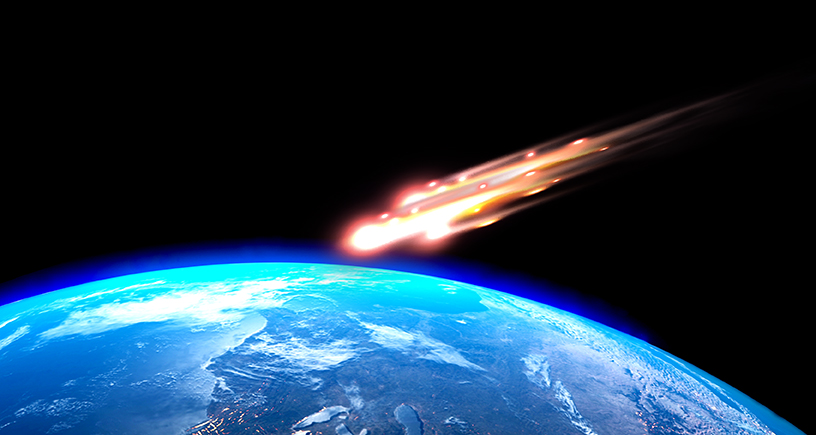
There are many objects floating around in our solar system. There are hundreds of thousands of these objects in orbit around different planets and the sun. They come in all shapes and sizes and some come very near to the earth even if you never see them. Space junk, asteroids, meteors, comets and more litter what we call space. Space junk is man made and is left behind by space travel. Asteroids, meteoroids and comets are naturally existing objects. These objects are important because scientists are able to collect data from them and study the history of our solar system. Scientists who study space are called astronomers. Collisions between asteroids and planets in our solar system have caused the planets to be permanently altered. Collisions with meteorites have changed the appearance of both planets and natural satellites like the moon. What exactly are asteroids and meteoroids? What are they made of? How are they different?
Asteroids and meteoroids are made of the same materials – a variety of elements along with rock and metals. Scientists believe they are what is left from the formation of the solar system and the planets. That means these floating rocks have been around for more than 4 billion years! Of the two objects, asteroids are the largest. This is because most meteoroids are broken off pieces of asteroids. As the asteroids orbit the sun they sometimes have violent collisions. When this happens, pieces break off and meteoroids are born.
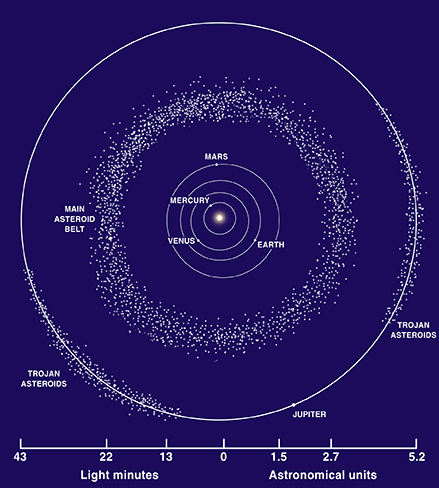
Almost all of the asteroids in our solar system are in orbit between Mars and Jupiter. This is called the Asteroid Belt and there are more than one million asteroids up there. The planets in our solar system orbit the sun in a consistent pattern. Asteroids make their trip around the sun in the same direction as the planets but they tumble and roll and they go. Their path is elliptical, meaning it is not a perfect circle but more oval or egg shaped. Scientists have named the largest asteroid Ceres. Ceres is about 1/4th the size of Earth’s moon and was first seen in 1801 by an Italian Astronomer named Giuseppe Piazzi. Could an asteroid hit Earth? Yes! As a matter of fact scientists believe a nine mile wide asteroid hit Mexico and caused the extinction of the dinosaurs as well as most other plant and animal species about 66 million years ago. Could it happen again? Of course it could, but scientists think it will not be any time soon.
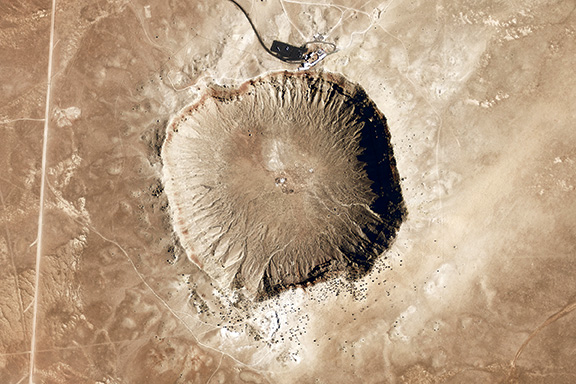
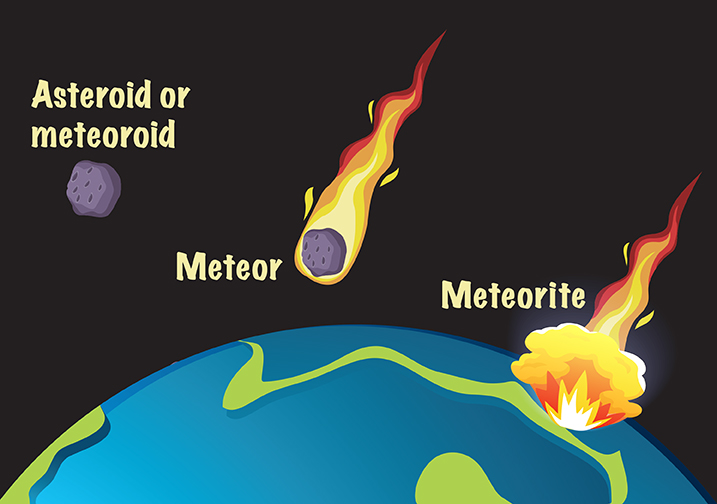
Most meteoroids, meteorites and meteors are small chunks of an asteroid that have broken off after two asteroids collided. These are really three names talking about the same object but at different times in its life. A meteoroid is the chunk of space rock travelling around the solar system. As the meteoroid enters a planet's atmosphere it is called a meteor (some call it a shooting star). Many meteors disintegrate in the atmosphere but those that don’t and reach the surface of the planet partially intact are called meteorites. Meteorites that do hit the earth can sometimes leave a crater. Examples of meteor craters are the Barringer Crater in Arizona, which is 50,000 years old. The Chicxulub Crater in Mexico which is credited for killing the dinosaurs, and the largest crater is the Vredefort crater in South Africa which is believed to be 2 billion years old..
When there is a large group of meteoroids in space together and the Earth passes through the cluster, astronomers call this a meteor shower. There are a number of these meteoroid clusters flying through space. The Earth passes through these clusters during its orbit around the sun at about the same time every year. As the meteors pass through the atmosphere, air resistance causes heat friction and the meteor burns up. This causes bright streaks of light to cross the night sky. Normally, we don’t see many meteors at one time. During a good meteor shower, you may see as many as 100 meteors in one hour. There are many apps and websites that track these meteor showers if you want to sit in your yard to watch. It is best to be in a dark area with no light pollution.